
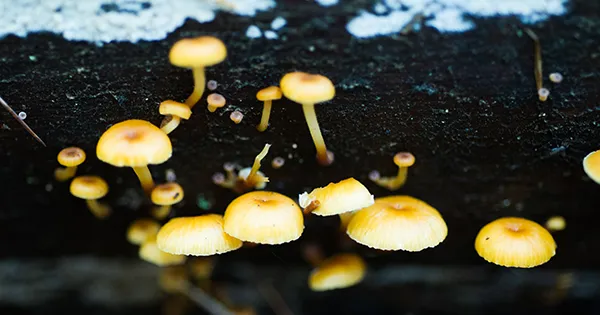
Ann Arbor’s parks, wooded landscapes, and seasonal changes create a rich environment for observing fungal biodiversity. Although mushrooms are often associated with food or emerging psychedelic research, their ecological importance extends much further. Fungi support nutrient cycling, interact with plant roots, and contribute to the natural processes that maintain healthy ecosystems. Understanding these roles provides a fascinating perspective on local biodiversity and encourages greater appreciation for organisms that frequently remain unnoticed beneath fallen leaves and forest soil.
Understanding Fungi as Living Organisms
Fungi belong to a biological kingdom distinct from plants and animals. Unlike plants, they do not produce energy through photosynthesis. Instead, they absorb nutrients from surrounding materials through specialized structures. Much of a fungus may exist as an extensive network of microscopic filaments, while visible mushrooms represent reproductive structures produced by certain species.
This distinction explains why a mushroom appearing above ground is only part of a much larger biological system. Underground fungal networks can persist even when no visible fruiting bodies are present. Their activities help shape soil conditions, influence decomposition, and contribute to the movement of nutrients throughout natural environments.
Understanding Different Mushroom Species in Ann Arbor
Ann Arbor’s natural landscapes support a variety of fungal species with different biological characteristics. Some mushrooms contribute to decomposition, while others form relationships with trees and surrounding vegetation. Certain species contain psychoactive compounds, although their presence should never be assumed from appearance alone. Understanding these distinctions helps residents appreciate fungal diversity without confusing ecological characteristics with potential effects on human health.
Growing interest in mushrooms ann arbor has also encouraged discussions about identification, scientific research, and responsible education. However, visually similar mushrooms can possess substantially different chemical properties, including potentially dangerous toxins. Reliable identification requires specialized knowledge rather than assumptions based on photographs or online descriptions. Educational resources can help people understand these differences while promoting greater awareness of mushroom-related risks.
Why Mushroom Identification and Education Matter
Mushroom identification involves examining biological characteristics, environmental conditions, and differences between individual species. Some mushrooms possess features that resemble unrelated varieties, creating confusion for people unfamiliar with mycology. Incorrect identification can have serious consequences, particularly when toxic species are mistaken for harmless ones. This makes scientific education an essential part of understanding fungal biodiversity.
Educational discussions increasingly distinguish culinary mushrooms from species containing psychoactive compounds such as psilocybin. These categories involve different biological properties, public health considerations, and legal restrictions. Understanding their differences helps readers interpret mushroom-related information more accurately. Reliable scientific sources also explain why emerging research findings should not be confused with established medical treatments or general claims about safety.
Relationships Between Fungi and Trees
Some fungi form mutually beneficial associations with plant roots through structures known as mycorrhizae. These relationships can improve a plant’s access to nutrients and water, while the fungus receives carbon compounds produced through photosynthesis. The precise benefits depend on the species involved and the environmental conditions surrounding the relationship.
These partnerships demonstrate that fungi are not simply organisms growing independently in soil. They participate in complex ecological interactions involving trees, microorganisms, insects, and other living systems. Protecting healthy habitats therefore means considering the organisms beneath the surface as well as the more visible plants and animals.
Responsible Observation and Conservation
Observing mushrooms can help people develop a closer connection with local natural environments. Photography, field notes, and participation in established nature programs offer opportunities to learn about fungal diversity. However, responsible observation involves respecting protected areas, avoiding unnecessary habitat disturbance, and following applicable park regulations.
Accurate identification is another essential consideration. Some toxic mushrooms resemble edible species closely enough to confuse inexperienced observers. Smartphone applications and photographs have limitations, particularly when distinguishing dangerous lookalikes. Educational observation should not be treated as confirmation that a specimen is safe for consumption.
Growing Interest in Mushroom Research and Awareness
Public curiosity about mushrooms has expanded beyond traditional ecological studies. Researchers are investigating the biological characteristics of different fungi, including the neurological effects of certain naturally occurring compounds. This developing field has encouraged discussions about mental health research, scientific methodology, and the importance of interpreting preliminary findings carefully.
In Michigan, these conversations also involve questions about public awareness and existing legal restrictions. Local enforcement policies concerning certain entheogenic substances do not automatically authorize commercial activities. Understanding the distinction between scientific research, public discussion, and legal permission helps communities evaluate information more responsibly. Continued educational efforts can encourage informed conversations without overlooking uncertainty or potential health risks.
Conclusion
Ann Arbor’s fungal biodiversity highlights the intricate relationships connecting soil, plants, microorganisms, and seasonal environmental conditions. Learning about these systems encourages ecological awareness while demonstrating that mushrooms have significance far beyond commercial products. Although Metro Mush is associated with the region’s broader mushroom conversation, the study of local fungi offers an independent educational subject grounded in ecology and conservation. Protecting natural habitats and supporting reliable environmental education can deepen public understanding of these remarkable organisms.