

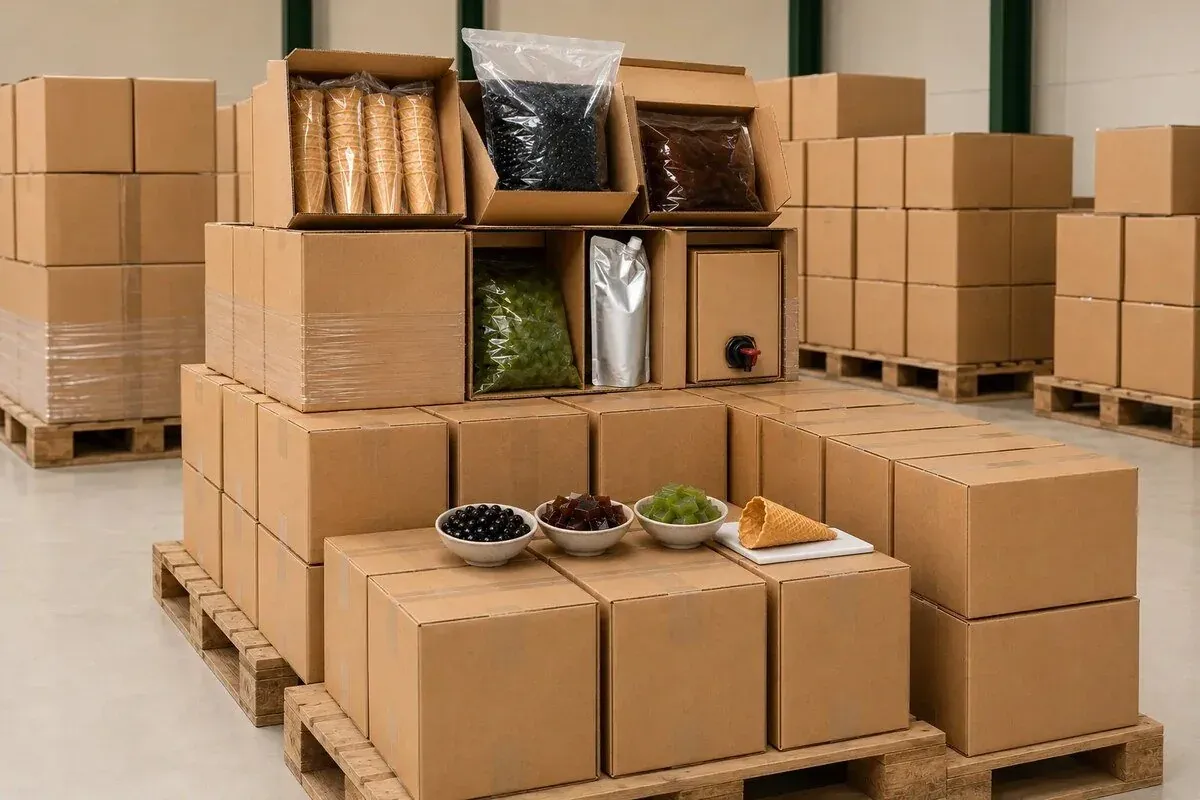
Buying powders from one factory, syrups from another and toppings from a third multiplies everything: invoices, lead times, carton labels and follow-up emails. An importer serving several chains feels this weight most, because a delay on a single item can hold up an entire container. The more suppliers involved, the more places a small error can hide, and the harder it becomes to trace the cause.
Many buyers now prefer one accountable commercial relationship that coordinates several manufacturers behind the scenes. It does not remove complexity, but it moves the coordination work away from the importer’s desk and into a structured, repeatable process that everyone can follow. It also gives the buyer a single point of contact when schedules change, which matters most during peak ordering seasons.
The Case for Combined Loads
Importers asking about consolidated shipment private label food and beverage ingredients usually want the same thing: fewer, larger deliveries. Mixed pallets can reduce handling, simplify customs entries and make freight costs easier to forecast than a string of partial loads. Fewer trucks, fewer customs lines and fewer invoices all mean fewer chances for a mistake to cost money.
Consolidation is not automatic. Products must be compatible in temperature, odor and packaging, and each category needs its own paperwork. A sensible plan confirms these points for every project before any booking is made, rather than discovering conflicts at the port. Early planning also helps the exporter schedule production runs so that every item is ready for the same loading date.
Paperwork That Prevents Port Delays
Customs officers and food regulators look for consistent information. Product names, ingredient lists, net weights and batch codes should match across invoices, packing lists and labels. A single mismatch can trigger inspection, and inspection means days of storage fees. Printing errors on cartons are a common cause, and they are easy to avoid if everyone checks the same approved file.
When reviewing importer documentation private label food ingredients require you to ask for sample documents during evaluation, not after production. Reading them alongside the specification shows whether a supplier can support regulated markets or only handles domestic trade. Missing or outdated papers rarely get fixed quickly, so it is wise to confirm what the destination market expects before orders are placed.
Planning the Import Route
Exporters coordinate shipping, but the importer still needs a confirmed route into the destination market. That means a licensed consignee, awareness of local labeling rules and agreed shipping terms. Settling these points in the first conversation prevents expensive surprises later. Local advisors, such as a licensed customs broker, can confirm the details quickly and often at modest cost.
Volume and format also shape the route. Full containers, shared containers and air freight for samples each suit a different stage. Matching the method to the project stage keeps cost proportionate while the program is still proving itself to both sides. Over time, buyers can graduate from sample parcels to larger consolidated orders as confidence in the supplier grows.
Building a Replenishment Rhythm
After the first shipment, the goal is rhythm. Agree on a forecast, a reorder window and a safety stock level so the next container is booked before shelves run low. Importers who plan on calendars rather than in panic keep branch operators supplied and satisfied. A steady rhythm also helps the manufacturer, who can plan raw material purchases and production slots well in advance.
Keep a shared log of lead times, delays and quality remarks. Over a few cycles, it becomes the most useful planning tool in the relationship, showing which products need larger buffers and which routes run reliably through every season of the year. Such records make annual reviews far easier and give both parties facts to discuss rather than recollections.
Conclusion
Importing ingredients does not have to feel like juggling. Fewer suppliers, aligned paperwork, and a realistic route do most of the work. The rest is discipline: confirming details early and recording what happens on every single shipment. Clear communication matters throughout, because most shipping problems start as small misunderstandings that nobody raised in time.
Buyers who want one coordinated partner for private-label powders, syrups and related items can look to Brief & Branch, which reviews shipping plans and documentation as part of each qualified project. That support lets importers focus on selling instead of chasing paperwork. Together, those habits turn a complicated supply chain into something a small importing team can manage confidently.