

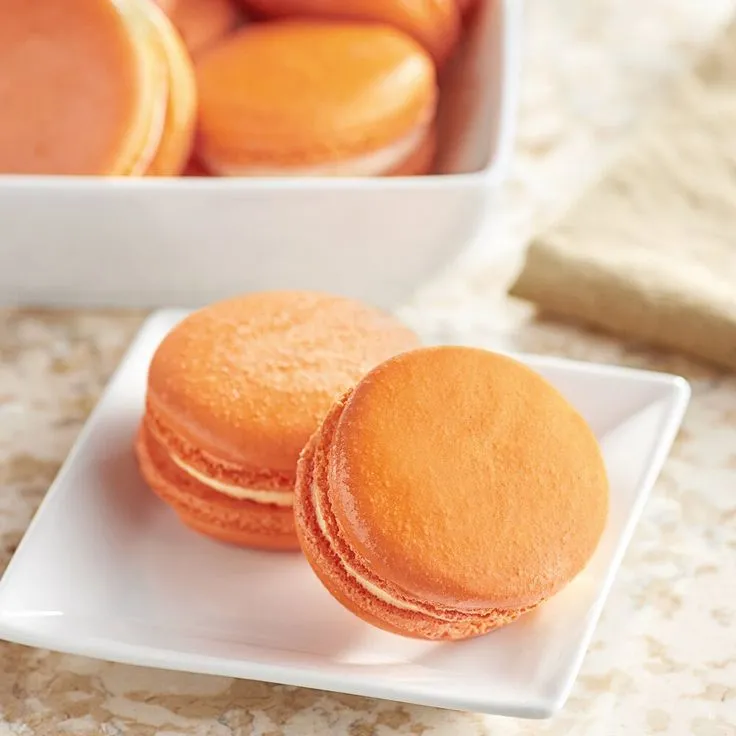
Orange can help manufacturers produce a warm, bright or golden orange color in a wide range of food and beverage products. Choosing a natural color, however, is not as simple as just matching a visual color. The food matrix, processing conditions, pH, dosage, storage conditions and desired intensity can all affect the final result. An evaluation process that is practical will be useful for product developers to test and select a color ingredient that will work properly in the formulation that they wish to create.
Define the Desired Orange Shade
The initial step is knowing exactly what the final look should be. Orange can vary in color from a light yellow-orange to golden to a deeper reddish-orange color.
The desired color should be evaluated once the color has been added to the full formulation. The end product color can be affected by ingredients, fats, proteins, sugars, acids and other ingredients.
Manufacturers should set a realistic goal before evaluating the various types of ingredients.
Explore Natural Orange Food Color Sources
Natural orange food color can be derived from many plant-based color sources. When manufacturers are looking for yellow, golden or orange colors, carotenoid-rich ingredients are typically considered.
Various sources can deliver varying levels of shades and intensity. The selection depends on the food application, processing environment, desired shade and formulation requirements.
Manufacturers should consider how the ingredient will act in the product as well as whether it will give an appealing concentrated color.
Consider Food Matrix Compatibility
Food color performance can be greatly affected by the food composition. Various formulation conditions can be created using beverages, dairy products, bakery products, sauces, snacks, confectionery and prepared foods.
As an example, a water-based compound may need high dispersion in an aqueous system, and a fat-based compound could need a different color preparation.
The physical characteristics of the finished food should therefore be taken into consideration by the product developer before he selects the color format.
Evaluate Processing Conditions
For many food uses, heat exposure is a critical factor. Natural color ingredients can be subjected to high temperatures during baking, cooking, pasteurization, sterilization, and other processes.
Processing affects the particular pigment and formulation. Manufacturers should evaluate colors under realistic processing conditions, and not just prior to production.
It’s also important to consider the length of time it takes to process. Different results could occur when 2 products are exposed to the same temperature, but for different processing times.
Review pH and Stability
The activity of some of the natural color ingredients may be affected by pH. A few pigments may hold to their original color within a fairly limited range, and others may shift colors with varying acidity.
Manufacturers should therefore check the color at the desired pH of the finished product. In the case of an acid product which can change in acidity during development, testing can be done over a practical range to gain some insight.
Color appearance may also change with time due to light, oxygen, and storage temperature.
Choose the Appropriate Format
Natural colors may be provided in powdered, liquid, emulsion, concentrate or other special preparation form. The proper format will depend on the way the ingredient is to be used in production.
Before choosing a product, manufacturers should take into account dispersion, solubility, handling, concentration, dosage, and storage.
The format should be easily incorporated into the formulation and should provide uniform color throughout the product.
Compare Dosage and Color Strength
Color strength should be assessed alongside dosage when evaluating natural orange food coloring for commercial production. A highly concentrated ingredient may require less material, while another preparation may need a higher dosage to reach the same visual intensity.
However, a lower dosage does not automatically mean a better ingredient. Product developers should compare the final shade, formulation compatibility, processing performance and overall handling requirements together.
Controlled trials using the same formulation conditions can make these comparisons more meaningful and help manufacturers identify the most practical option for their production process.
Test Before Commercial Production
Application testing offers important information prior to the approval of color for mass production. Firms can try out test mixes at a few dose amounts. Then, they check how things look both prior to and after heat treatment.
Shelf checks also give clear data on how color tone shifts over a long time on the rack. This can be beneficial for products that have a longer shelf life or are subject to much light and temperature fluctuation. Maintaining clear trial records can also help to ensure consistency when the ingredient is constantly being purchased.
Conclusion
There are a variety of foods and beverages that can be formulated with natural orange colors; however, the appropriate choice will depend on the color desired, food matrix, processing conditions, pH, format, dosage, and storage conditions. Evaluation of candidate ingredients in finished product gives a more solid basis for formulation decision. FoodRGB.com features a list of food-based colors that are appropriate for use in natural food coloring solutions as well as a Technical Partner section where manufacturers can discuss their needs with an expert.